
What's bugging your home, and how to get rid of it
Pest profiles with photos. Bites. Products that work. Straight talk on when to call an exterminator.
Identify a pest- 16+species with photos and look-alike comparisons
- 60+products: active ingredients, how to use them, safety around kids and pets
- 3ways to fix it: DIY, store-bought, professional
- 24 hfirst-day action plan for every pest

Identify
what it is
By where you found it, its size and behavior, with photos that show how it differs from look-alikes, so you treat the right pest.

Assess
the risk
Does it bite, what can it spread, what the bite looks like and when to see a doctor.

Get rid of it
yourself
Home remedies, baits, sprays and traps: what works for each pest and what is a myth.

Call
a pro the smart way
When you really need an exterminator, how the treatment works, what it costs and how not to overpay.
A guide that answers in the right order
First "what is it," then "is it dangerous," then "how do I get rid of it," and only then "with what." Every profile works this way.

Bed bugs, roaches, ants, termites, fleas, gnats, silverfish and stink bugs: how to tell them apart and what to do in the first 24 hours.


Which spiders are harmless and which two are not, scorpions in the Southwest, and ticks after a walk in the yard.

How to tell you have mice, where to look for entry points, what to seal them with, which traps work and when to call a pro.

Wasps, yellow jackets, hornets and carpenter bees: what a sting looks like, what to do right away and when to see a doctor.

Raccoons, squirrels, bats, opossums and skunks: signs they moved in, what is legal to do yourself and when to call wildlife removal.

What bug is this?
Pick where you saw it and what it does, and we'll show matching pests with photos.
The most common household pests
The six pests Americans ask about most.

Bed Bugs
- bites or stings
- won't leave on its own
Bite at night in rows of 3–5, hide in mattress seams and behind headboards. They never leave on their own.

Cockroaches
- does not bite
- won't leave on its own
German roaches move into kitchens for warmth and water and multiply within weeks. They spread bacteria and trigger asthma.

Ants
- does not bite
- won't leave on its own
Odorous house ants and pavement ants trail to sugar; the nest is in a wall or under a slab. Treat the colony, not the trail.


Spiders
- does not bite
- leaves on its own
Most house spiders are harmless and eat other bugs. Learn to spot the two that matter: black widow and brown recluse.

Termites
- does not bite
- won't leave on its own
Spring swarms, mud tubes on the foundation, hollow-sounding wood. Damage is silent and not covered by most home insurance.


Mice
- does not bite
- won't leave on its own
Scratching in the walls at night, chewed wires and cereal boxes. They move indoors in the fall when it gets cold.

An adult bed bug can survive for months without a meal, and a female lays up to 500 eggs. Waiting them out or leaving for a week does not work. A full treatment with a follow-up in 10–14 days does.
From our Bed Bugs guideOnly two US spiders send healthy adults to the doctor: the black widow and the brown recluse. The cellar spider in your ceiling corner is free pest control.
From our Spiders guideOne German cockroach female can produce hundreds of offspring, and a new generation matures in about six weeks. Two roaches in September can mean a colony by the holidays.
From our Cockroaches guideA mouse can squeeze through a gap the width of a pencil, about 1/4 inch. Spray foam alone will not stop it. Pack the gap with steel wool or copper mesh first.
From our Mice guideWhat's active in October
How active each pest is right now, as a percentage of its yearly peak.

Curve: 12 months; dot: October. Pest calendar →
Three ways to fix it
The further down, the more reliable and the more expensive. Every pest profile tells you which step to start with.
- 1

DIY home remedies
Vinegar, boric acid, diatomaceous earth: for a few stragglers.
- 2
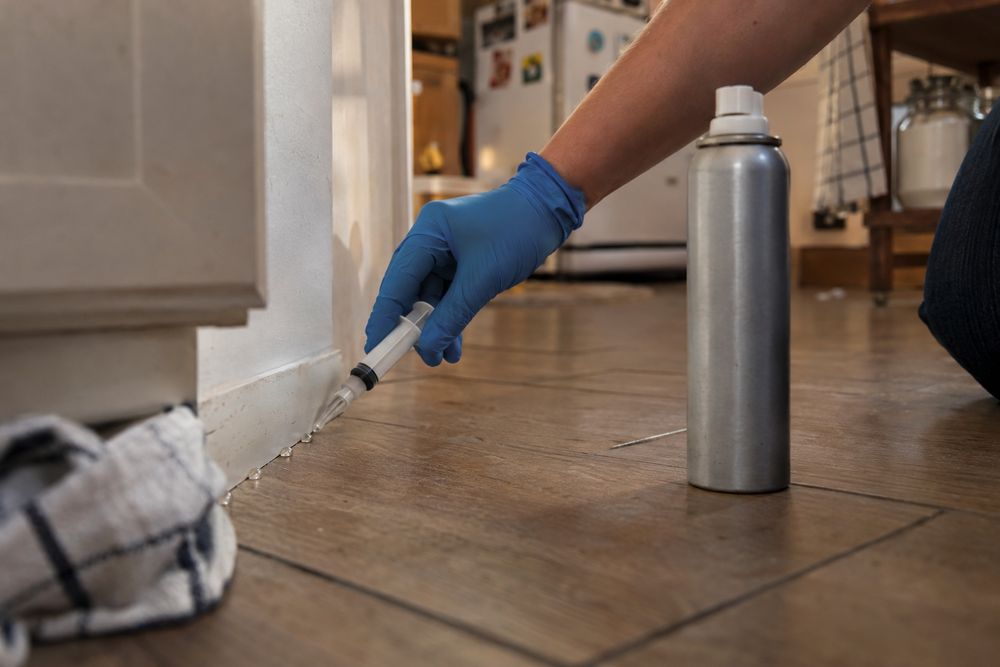
Store-bought products
Gel baits, sprays, traps: once you can see an infestation.
- 3
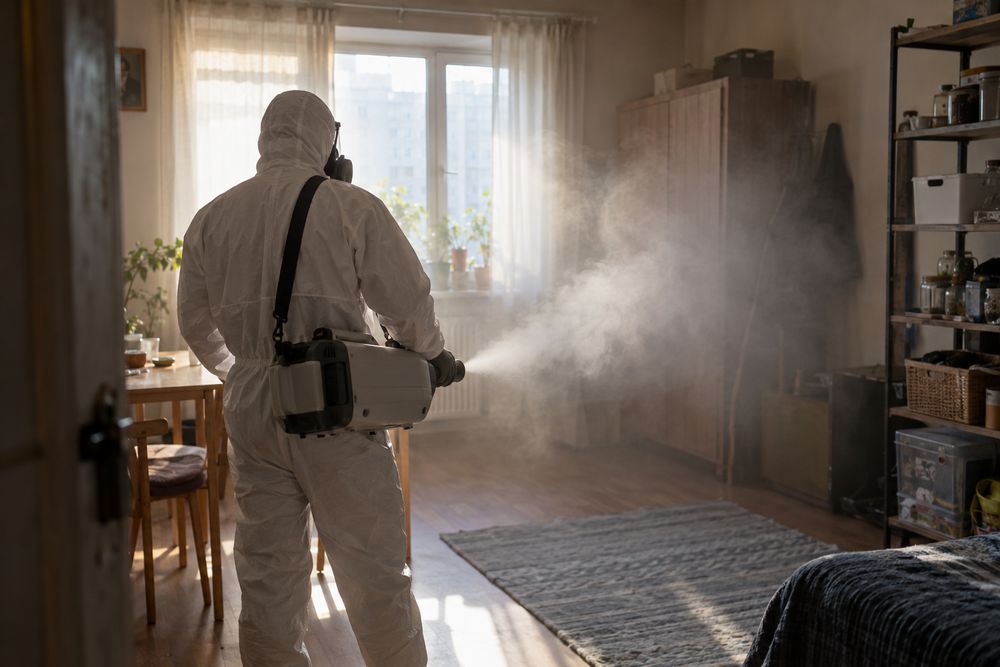
Professional pest control
Treatment plus warranty: bed bugs, termites, repeat problems.


What to use
Three types of store-bought products: how they differ and how to use them so you only have to do it once.
Sprays & aerosols fast knockdown
Work in minutes, but not on eggs · Plan a second treatment in 10–14 days · Ventilate and put dishes away
Gel baits & traps work for weeks
Roaches and ants carry the bait back to the nest · Safer around kids and pets · Pea-size dots every 6–8 inches
Dusts & powders barrier treatment
Along baseboards, pipes and wall voids · Not for food-prep surfaces · Keep away from kids and pets


Latest guides

Bed bug, mosquito or flea bite? How to tell in a minute

Baby cockroaches: what tiny roaches mean and what to do

How much does pest control cost in 2026, and what are you paying for

Can't find your pest?
Tell us what you saw and where, attach a photo, and we'll help you figure out what it is and what to do.